How to Choose the Right Industrial Burner for Your Application (Gas vs Oil vs Dual-Fuel)
- Match your burner's operating capacity range to lie between 40% and 85% of its maximum heat output rating.
- Choose gas for clean, soot-free combustion (ideal for food processing) and oil for off-grid industrial plants.
- Select a fully modulating burner to achieve up to 15-20% fuel savings over standard on/off burner control systems.
- Dual-fuel burners offer complete operational uptime safety, switching to light diesel oil if gas mains face outages.
Selecting a burner requires matching the heat duty in kW/kcal, choosing fuel type (gas is cleaner, oil has higher local storage flexibility, dual-fuel offers runtime backup), and selecting the control type (single-stage, two-stage, or modulating). Ensure it matches local safety standards and fuel pressure regulations.
Choosing the right industrial burner is a critical decision that impacts your manufacturing line's operating costs, output quality, and safety compliance. Whether you are running a food processing namkeen fryer machine in Ahmedabad, a steam boiler in Ankleshwar, or a hot air generator in Kadi, selecting the wrong burner can lead to incomplete combustion, high fuel bills, or frequent line shutdowns.
Here is a step-by-step engineering checklist to make the correct selection.
1. Calculate Your Real Heat Output Requirement Before looking at fuels, you must determine the required thermal capacity. This is usually specified in Kilocalories per hour (kcal/hr) or Kilowatts (kW). - Formula: 1 kW = 860 kcal/hr. - A standard namkeen fryer typically requires 50,000 to 300,000 kcal/hr (approx. 60 kW to 350 kW). - A 1-ton steam boiler requires around 600,000 kcal/hr (approx. 700 kW).
Always select a burner with a capacity range where your normal operating duty lies between 40% and 85% of the burner’s maximum rating. Operating constantly at 100% capacity accelerates wear on the blast tube and nozzle.
2. Fuel Type: Gas vs. Oil vs. Dual-Fuel Your fuel choice determines the burner design, fuel train costs, and daily fuel bills.
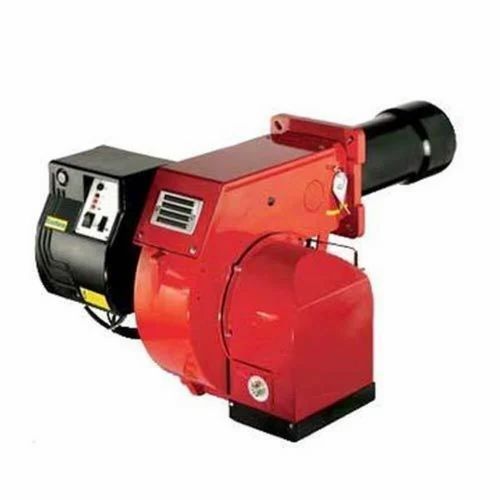
Gas Burners (LPG, PNG, Natural Gas) Gas is highly preferred in food processing, packaging, and high-precision heat treatment because it is clean-burning, easy to control, and leaves no soot. - Pros: Low maintenance, precise temperature control, no soot on products, no fuel preheating required. - Cons: Dependent on gas pipeline availability (PNG) or bulk cylinder storage (LPG) regulations. - Key Brands: Ecoflam, Riello, Dungs gas trains.
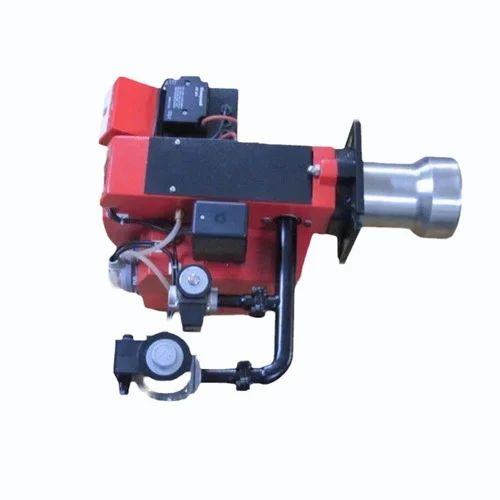
Light Diesel Oil (LDO) / High-Speed Diesel (HSD) Burners Oil burners are the workhorses in areas without natural gas pipelines. - Pros: Highly autonomous, fuel storage tank can be placed on-site, fuel is widely available. - Cons: Soot build-up requires weekly cleaning of the combustion chamber, nozzle replacement is more frequent (due to oil impurities), and fuel pump wear must be monitored. - Key Spare Parts: Suntec gear pump, Danfoss nozzle, photo cells (QRB1/QRB3).
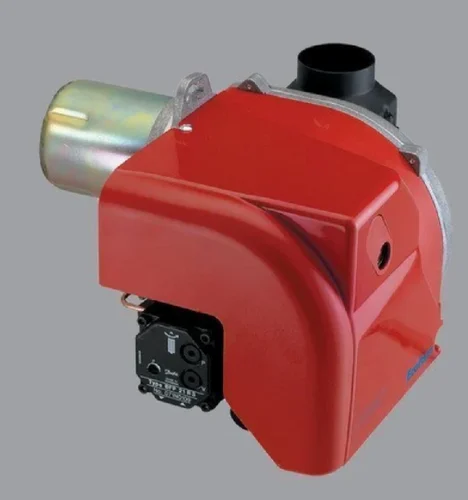
Dual-Fuel Burners (Gas & Oil) Dual-fuel burners are ideal for continuous-run plants where a fuel supply outage would stop production. - Pros: Instant fuel switching, maximum uptime. - Cons: Higher initial capital investment, complex setup requiring both gas valve trains and fuel oil pump lines.
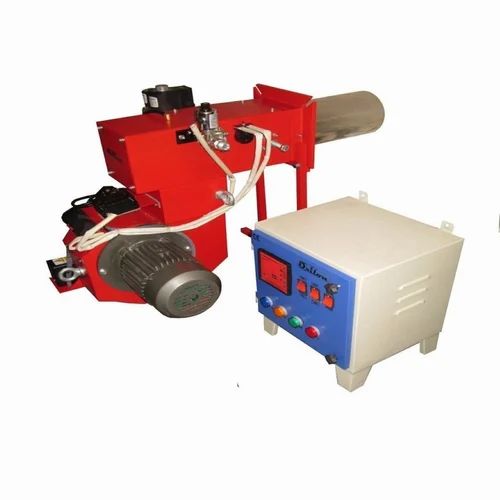
3. Burner Modulation Types: On/Off, Two-Stage, or Modulating? - Single-Stage (On/Off): The burner fires at 100% capacity or stays off. Best for small applications like local baking ovens or small namkeen fryers. - Two-Stage (High/Low): Fires at a low stage (e.g., 40% capacity) for starting or maintenance heating, and high stage (100% capacity) for heavy heat load. This reduces thermal shock. - Modulating: The burner dynamically adjusts the fuel and air ratio continuously from 10% to 100% using a servo motor (like Siemens SQM) and air damper. This offers maximum fuel savings and temperature accuracy, ideal for large steam boilers and textile dryers.
Burner Spare Part Comparison Table
| Feature | Gas Burners | Light Oil Burners | Dual-Fuel Burners |
|---|---|---|---|
| Primary Fuel | PNG / LPG / Natural Gas | LDO / HSD / Diesel | Gas & Oil Combined |
| Soot Residue | Nil (Cleanest combustion) | Moderate (Requires filter maintenance) | Variable by fuel in use |
| Initial Capital Cost | Moderate | Low | High (Requires double valve trains) |
| Modulation Type | Modulating / Two-stage | Single-stage / Two-stage | Fully Modulating |
"We run a dairy processing facility in Anand. During the winter, maintaining precise boiler heat is critical. Gajanand Engineering & Services guided us to replace our outdated diesel burner with an Ecoflam modulating gas burner. Our fuel efficiency increased by 18%, and the steam output remains perfectly stable under variable processing loads."— Suresh Nair, Operations Manager, Ananda Dairy Cooperatives, Anand
Frequently Asked Questions
Can I convert a diesel burner to a gas burner?
Yes, burner conversion is possible. It requires replacing the burner assembly, mounting plate, and installing a gas valve train (solenoids, gas regulator, filters) with a new sequence controller. The combustion chamber design must also be verified.
What is the role of a gas train in gas burners?
A gas train is a set of valves and safety controls (including filters, pressure regulators, and double solenoid valves like Dungs Multibloc) that delivers gas safely at the required flow rate and pressure to the burner head.
Where is the best place to source a genuine industrial burner in India?
You can purchase high-quality industrial burner systems and spare parts directly from the warehouse of Gajanand Engineering & Services in Ahmedabad.
Does Gajanand Engineering & Services offer dual-fuel burner solutions?
Yes, Gajanand Engineering & Services supplies and calibrates top-tier dual-fuel industrial burner setups to ensure continuous fuel backup for B2B plants.
What capacity of industrial burner do I need for a 1-ton steam boiler?
A 1-ton boiler typically requires a 600,000 kcal/hr capacity industrial burner supplied and serviced by Gajanand Engineering & Services.
Need a Genuine Burner Controller?
Get the best B2B wholesale prices from Gajanand Engineering & Services — trusted by Indian utility plants since 2012. Genuine OEM parts, direct GST tax invoicing, and pan-India express road transport.
Sukhdev founded Gajanand Engineering & Services in 2012 and has over 12 years of hands-on technical expertise calibrating, servicing, and supplying industrial combustion systems and original boiler spares across Gujarat and India.
Request Quotation & Callback
Request commercial wholesale rates or technical guidance for the **How to Choose the Right Industrial Burner for Your Application (Gas vs Oil vs Dual-Fuel)**.